A covered arena turns riding from a weather-dependent hobby into a year-round program. A red steel covered horse arena does that with a building that resists rot, handles heavy snow loads, and often lasts 40 to 50 years with minimal maintenance. The real difference between a great covered arena and a problem-prone one isn't the steel — it's everything underneath and around it. This guide walks through the documented benefits, the full construction process, and why property owners increasingly choose Groundshapers as the single contractor handling site prep, building erection, and footing installation in one coordinated project.
What a Red Steel Covered Horse Arena Actually Is
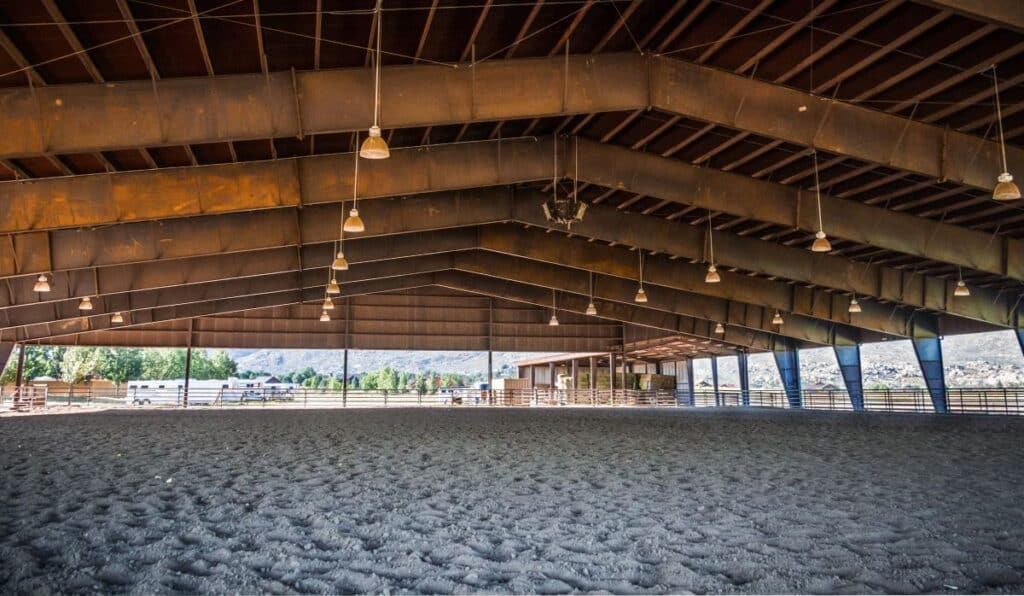
A red steel covered horse arena is a clear-span steel-framed structure — typically finished in the classic red equestrian color — built specifically to shelter a riding surface. Unlike a wood pole barn, the primary structural members are engineered steel columns and rafters that create uninterrupted interior space. Common equestrian sizes include 60 x 120 feet for a small private arena, 80 x 180 feet for a standard riding arena, and 100 x 200+ feet for show or training facilities.
The "red" is more than aesthetic. The traditional red finish is one of the most widely available baked-on or Kynar-coated steel color options, carries strong UV resistance, and blends with agricultural and rural architecture — often important for county zoning and neighbor relations. Most systems are designed as clear-span buildings, meaning no interior support columns interrupt the riding space.
The result is a weather-proof, maintenance-light, long-lifespan building that lets a horse property operate on schedule regardless of the forecast. But all of that performance depends on the building sitting on a correctly engineered site — which is where most problems start.
The Documented Benefits of a Red Steel Covered Horse Arena
Year-Round Usability
A covered arena removes weather from the training schedule. Rain, snow, extreme heat, and UV exposure no longer determine whether horses work that day. For boarding barns, training programs, and lesson operations, that consistency is the actual product clients are paying for.
Exceptional Structural Life
Properly coated steel structures routinely carry 40-year paint and panel warranties from major building manufacturers, with structural steel designed for service lives well beyond that. Compared to a wood-framed structure that may require major repair within 20 to 25 years, the red steel building is typically a one-generation purchase.
Clear-Span Interior
A clear-span steel arena has no interior posts to ride around, which matters for safety (no collision risk at speed), for dressage and jumping work that requires consistent track, and for insurance ratings on some lesson programs.
Strong Snow and Wind Load Performance
Steel arena buildings are engineered to regional snow and wind load codes. For northern climates, this is not optional — a collapsed roof from an unusually heavy snow event is one of the most documented catastrophic failures in older wood structures.
Lower Insurance and Maintenance Costs
Steel doesn't rot, warp, or harbor insects, and doesn't require repainting at the same interval as wood. Many insurance carriers rate steel equestrian buildings more favorably than equivalent wood-framed structures because of reduced fire and structural-failure exposure.
Footprint Flexibility
Because steel arenas are clear-span and engineered to order, the building can be sized to match your land, your zoning setbacks, and your intended disciplines. A jumper barn needs different ceiling height than a Western training operation; both get accommodated in the engineering phase.
Resale and Property Value
A well-built covered arena is typically one of the highest-return capital improvements on an equestrian property. It expands the buyer pool at resale and meaningfully raises the property's working value as a commercial operation.
Rider and Horse Health
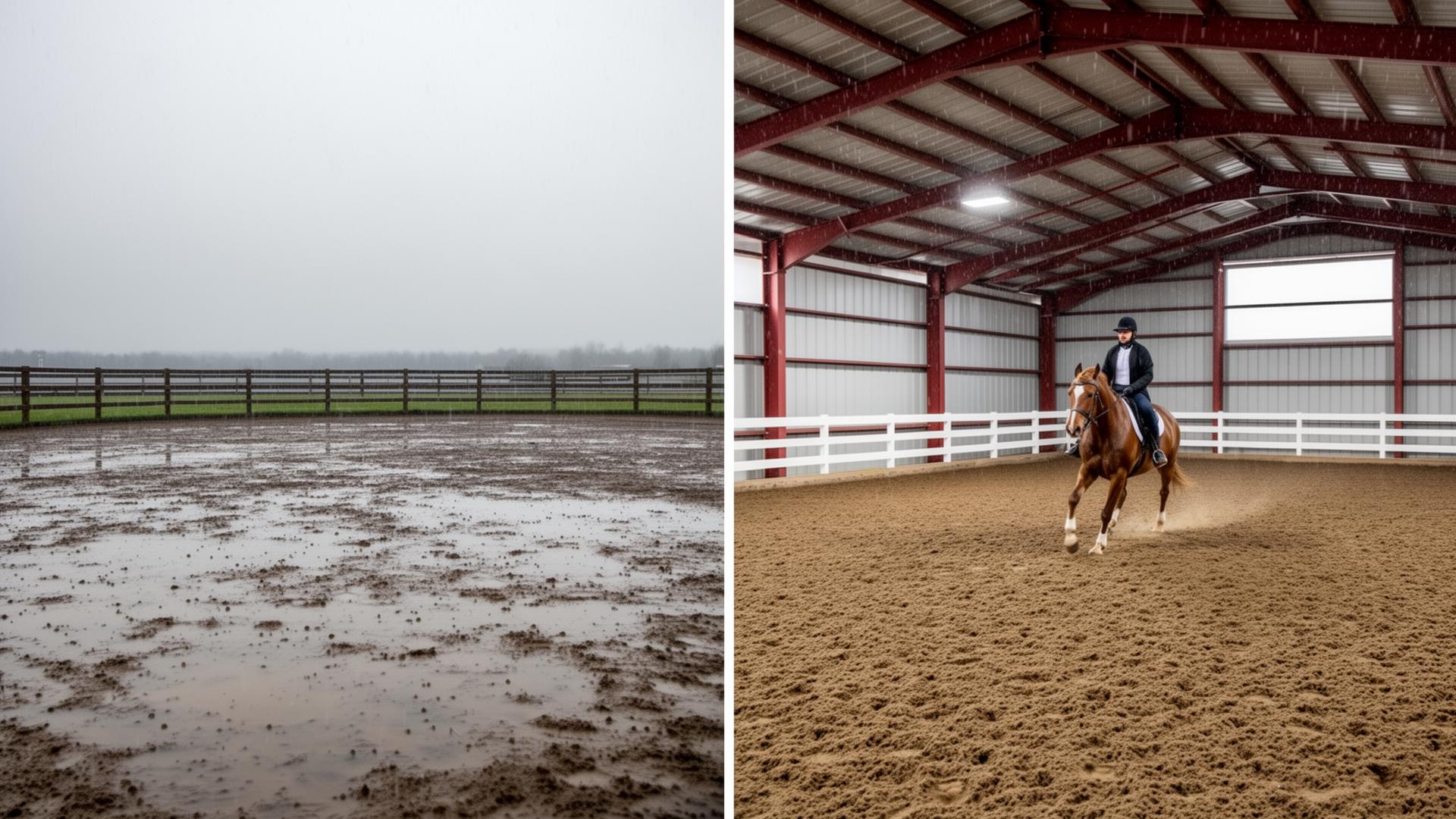
Covered footing stays at more consistent moisture content, which reduces dust, reduces slip risk, and extends footing life. For rider respiratory health and horse hoof and joint health, that consistency is a documented benefit in equine facility management research from multiple university extensions.
How Groundshapers Approaches a Red Steel Covered Horse Arena Build
A covered arena is actually three projects stacked together: the site, the building, and the footing. When those three are handled by three different contractors, the seams between them are where problems live. Through our equestrian site construction services, Groundshapers delivers all three as a single coordinated build.
Step 1 — Site Evaluation and Drainage Plan
Before any steel is ordered, we walk the property, run a percolation test, map existing drainage, and identify the optimal arena footprint. Key factors include prevailing wind direction (for natural ventilation), solar orientation (for rider comfort), distance from existing barn and paddocks, access for concrete and steel deliveries, and routing of surface and subsurface drainage away from the pad — see our arena drainage and grading solutions for the full approach.
Step 2 — Grading and Subgrade Preparation
We grade the arena footprint, plus an engineered perimeter margin for drainage, to the required elevation and slope. The subgrade is shaped with a consistent slight slope — typically falling gently to one end or crowning from center — so any water that reaches the pad moves off it. Heavy clay sites get supplemental drain tile at this stage.
Step 3 — Building Pad Construction
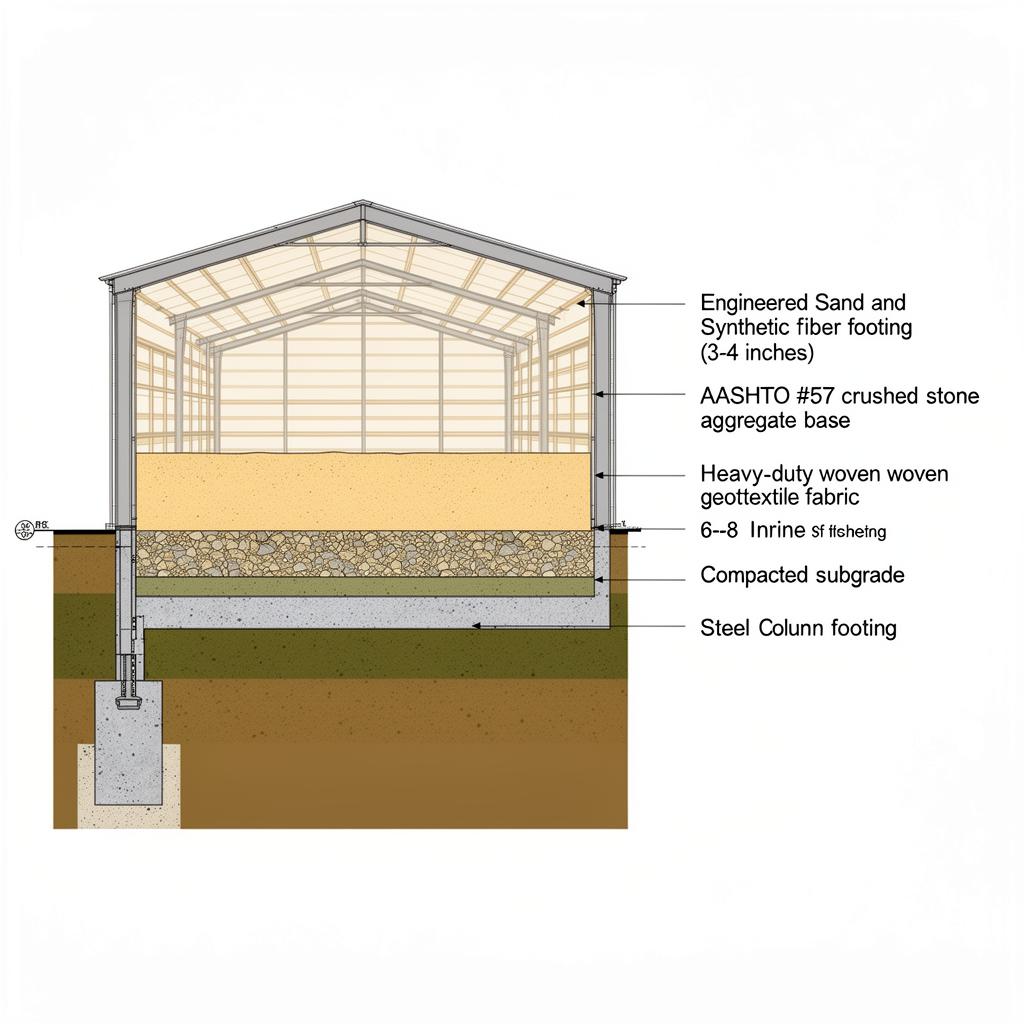
The subgrade is covered with heavy-duty woven geotextile fabric to prevent soil migration, then built up with compacted graded aggregate — typically 6 to 8 inches of AASHTO No. 57 crushed stone installed in compacted lifts. This is the load-bearing platform that carries both the building footings and decades of horse traffic above.
Step 4 — Steel Building Foundations
Steel column footings are excavated, formed, and poured to the building manufacturer's engineered specifications — typically to frost depth in northern climates, with anchor bolts set to exact tolerances. A misplaced anchor bolt at this stage is one of the most expensive and time-consuming problems in arena construction. Groundshapers sets every footing to the engineered drawing package.
Step 5 — Red Steel Building Erection
With the pad complete and footings cured, the red steel building is erected — columns, rafters, purlins, side panels, roof panels, and trim. Groundshapers coordinates the erection crew and delivery schedule so the building rises on the pad we've prepared, with no coordination gaps or delays waiting on a separate contractor.
Step 6 — Arena Footing Installation
Inside the completed building, we install the engineered riding footing — typically a base layer of crushed stone (if not already part of the pad), a geotextile layer to separate base from footing, and a top layer of washed silica sand blended with synthetic fiber, fleece, or rubber additives sized to the intended disciplines. Depth typically runs 3 to 4 inches for general riding, deeper for jumping and reining. Footing is installed to manufacturer specification so the blend performs as engineered.
Step 7 — Finishing Work
Final work includes perimeter grading so surface water moves away from the building, kickboards or bumper boards along the interior walls, gate and entry finishing, exterior drainage swales, and a documented maintenance plan handed to the owner on day one.
Timeline You Can Plan Around
A typical Groundshapers red steel covered horse arena build — from first excavation to final footing groom — runs 10 to 16 weeks depending on size, weather, and the building lead time from the manufacturer. Coordinating all phases under one contractor typically compresses that timeline by several weeks compared to sequencing separate site, building, and footing contractors.
Why One-Stop-Shop Construction Matters
A covered arena built by three separate contractors is a project with three separate schedules, three separate warranties, and three separate finger-pointing opportunities when something goes wrong. These are the most common seams:
- The site-to-building seam: if the pad isn't flat, level, and drained correctly, the building crew arrives and either can't erect or does so over a compromised base. Anchor bolt placement must be perfect.
- The building-to-footing seam: if the interior isn't graded and prepped to the right elevation, the footing installer is left to either correct someone else's work or install footing over a surface that will fail.
- The drainage-to-finish seam: if site drainage wasn't designed at the start, water ends up at the building perimeter or — worse — under the footing.
Groundshapers handles all three phases as one project with one schedule, one point of accountability, and one coordinated set of engineering specifications. The building rises on a pad we built to match it, and the footing goes into a structure we prepared to receive it.
Who a Red Steel Covered Arena Actually Suits Best
Private owners with 3 to 6 horses often build 60 x 120 to 80 x 160 covered arenas as the single biggest capital improvement on the property. The building extends riding season, protects a significant footing investment from weather, and typically adds meaningful property value.
Small training and boarding operations (8 to 20 horses) use 80 x 180 or 80 x 200 covered arenas to run year-round lesson and training schedules. Revenue consistency through winter and monsoon-like wet seasons usually justifies the capital within 3 to 6 years.
Commercial training, show, and lesson barns (20+ horses) typically build 100 x 200 or larger covered arenas with higher ceiling heights to accommodate jumping and show-prep work. These facilities often run from dawn to after-dark under lighting, making the covered environment part of the core business model.
Breeding and rehab operations use covered arenas for controlled conditioning work on valuable horses where weather-driven schedule changes are unacceptable.
Practical Implementation Guide for Your Property
Step 1 — Confirm Zoning and Setbacks Early
Large agricultural buildings trigger zoning review in most jurisdictions. Confirm setbacks, height limits, and any HOA or county design requirements before the project kicks off. Groundshapers includes this review in the initial site assessment.
Step 2 — Size the Arena to Your Discipline
Dressage work needs consistent long sides; reining and cutting need specific footing depth; jumping needs ceiling clearance. Size the building to the discipline, not the other way around.
Step 3 — Engineer for Your Snow and Wind Load
Do not accept a "standard" building in a non-standard climate. Your arena should be engineered to your local code minimums, with a conservative margin for unusual events.
Step 4 — Build Drainage Before Anything Else
A covered arena sheds every drop of water that hits its roof. Without perimeter drainage, that water ends up wherever gravity takes it — typically back toward the building and the footing. Drainage is not optional.
Step 5 — Plan Footing Maintenance from Day One
Engineered footing needs regular grooming, moisture management (where applicable), and periodic top-up. Groundshapers provides a maintenance schedule with every arena build.
Mistakes We Help Clients Avoid
- Ordering the building before the site is assessed
- Letting three different contractors sequence a single project
- Under-sizing the aggregate base beneath the footings
- Choosing footing by price instead of by discipline and manufacturer specification
- Skipping perimeter drainage because the arena is "covered anyway"
Conclusion
A red steel covered horse arena is typically the highest-impact capital improvement a working horse property ever makes. It delivers year-round usability, 40-year-plus structural life, and significant property value — but only when the site, building, and footing are engineered together, not stitched together after the fact. Groundshapers exists specifically to deliver that coordinated build as one project, with one point of accountability, from first excavation through final footing groom.
Your next step: schedule a Groundshapers site assessment. We'll walk the property, run the drainage test, review zoning, and give you a full quote covering site work, building erection, and footing installation as one package — not three separate bids you have to coordinate yourself. That one visit is how a long-considered capital project becomes a scheduled build.
This article references publicly available information from steel building manufacturer specifications, University of Kentucky Equine Science extension resources, the American Association of Equine Practitioners, and published equestrian facility construction guidance. All dimensions, timelines, and construction specifications are drawn from documented industry sources and Groundshapers project experience. Results may vary based on site conditions, climate, local codes, and equipment selection.
Frequently Asked Questions
Ready to Start Your Project?
Get a free consultation and custom quote from our expert equestrian ground team.
Request a Free Quote